Sometimes the best interviews are the ones that take you somewhere you did not expect to go.
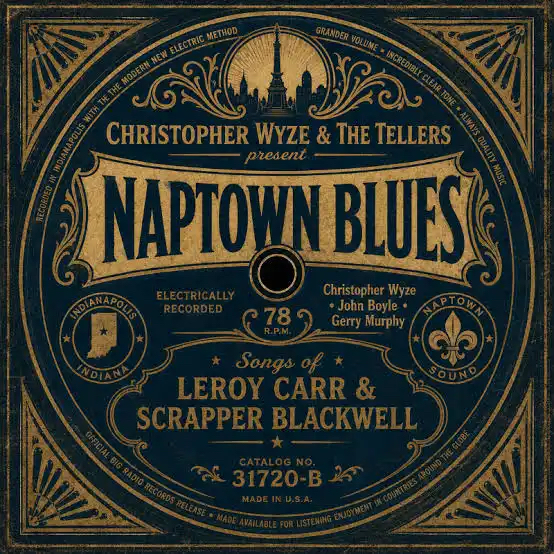
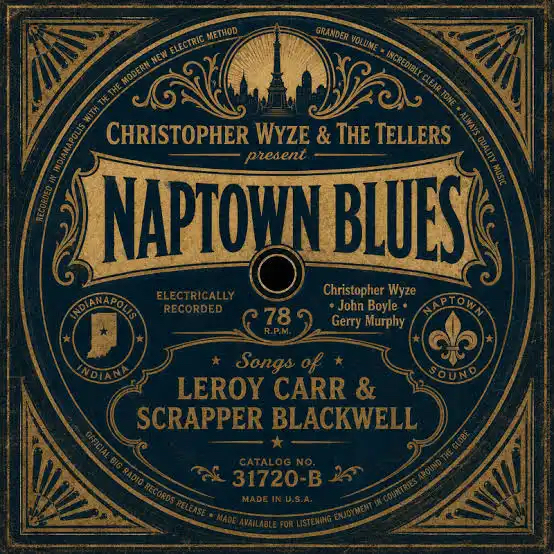
When I got on the phone with Christopher Wyze, frontman of Christopher Wyze & The Tellers, I knew we were going to talk about Naptown Blues, the band’s new album honoring blues legends Leroy Carr and Scrapper Blackwell. What I did not expect was to spend the next stretch of our conversation completely absorbed in a piece of American music history that feels both deeply important and strangely overlooked.
And honestly, those are my favorite kinds of conversations.
I asked Wyze the question I often use to begin an interview: Who is Christopher Wyze?
His answer was simple.
“A blues guy and a songwriter and a storyteller.”
That last word ended up defining nearly everything that followed.
Wyze has spent much of his life writing. He has written books, worked in advertising, owned an agency, served as a creative director and, as he joked, written “millions of words that somebody, believe it or not, paid me to write.” Songwriting came later, but storytelling had always been there.
It is even built into the name of his band.
“The storytelling—that’s why I gave the band that name, The Tellers, because they help me tell the stories,” he explained.
Naptown Blues began almost accidentally.
Wyze and the band had been performing in Mississippi when, the day before a show, they decided to add “How Long, How Long Blues,” the landmark song associated with Leroy Carr and Scrapper Blackwell. Wyze knew who the men were, but he admits he did not yet know much about their lives.
That changed on the ride home.
Several members of the band are from Indianapolis, and as they listened to more of Carr and Blackwell’s music, curiosity took over.
“Who are they really?” Wyze remembered wondering.
That question became a notebook. The notebook became research. The research became recordings. And eventually, the recordings became an entire album.
Wyze and guitarist John Boyle had initially recorded a few of the old songs for possible television and film placement. They enjoyed the process so much that they decided to go further.
“Let’s do a whole damn album,” Wyze recalled.
So they did.
They brought in bassist Jerry Murphy, another Indianapolis musician, and recorded Naptown Blues at Postal Recording in Indianapolis. The geography mattered. This was not just a collection of old songs to them. It became a hometown project.
Carr and Blackwell were connected to Indianapolis during one of the most important periods in early blues history, and the deeper Wyze dug, the more amazed he became that their story was not more widely known in the city.
He eventually wrote a 24-page booklet of liner notes to accompany the record.
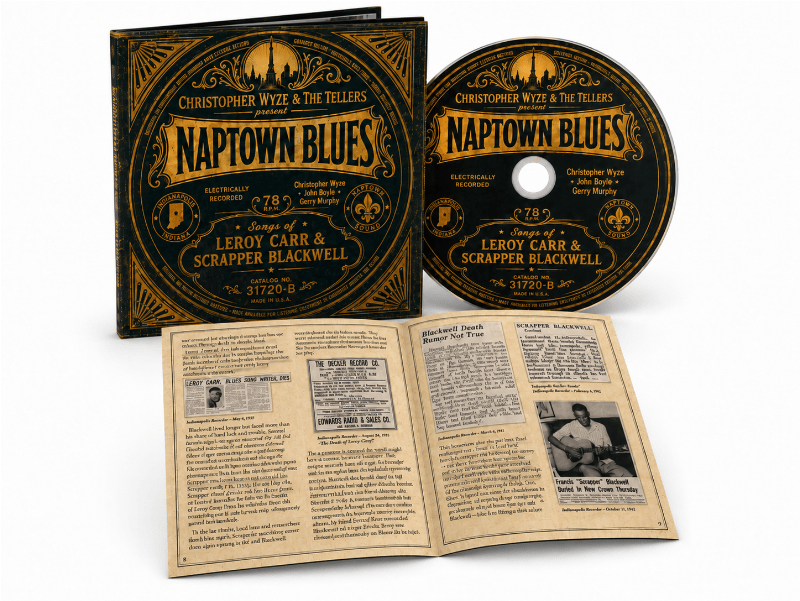
“It’s an amazing story,” he told me. “It’s a sad story. It’s an ‘I can’t believe that’ story. And it’s a ‘how come no one in Indianapolis, where I live, really knows about these guys, talks about these guys, reveres these guys?’ story.”
By that point in our conversation, it was obvious these two musicians had become more than historical subjects to him.
“They’ve become kind of my heroes.”
That enthusiasm was infectious.
I love history, and as he began describing Indianapolis in the late 1920s, Indiana Avenue, record shops, clubs and the musical world surrounding Carr and Blackwell, I found myself thinking how easily important stories can disappear when no one makes a point of carrying them forward.
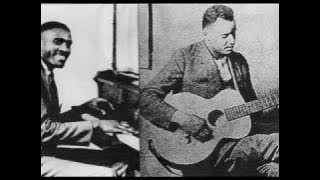
Carr and Blackwell reportedly met through a record-shop owner on Indiana Avenue. Within weeks of meeting, they were recording together.
Among those early songs was “How Long, How Long Blues.”
It became enormously influential.
The pair would go on to record roughly 200 songs during their time together, creating a style that sounded different from the image many people carry in their heads when they hear the word “blues.”
Wyze calls it city blues.
That distinction matters to him.
“We think of the blues as being the Delta,” he said.
Carr and Blackwell, however, were singing about a different world. Their songs carried the energy of city life: clubs, relationships, trouble, money, nights out and the sometimes messy consequences of all of it.
Wyze laughed while describing the difference.
Their songs might as well have said, “Hey, I stayed out a little late last night at the club and ended up with my ass in jail.”
It was blues, certainly, but blues shaped by another environment.
“It was a city kind of thing,” he said. “They were upbeat. It was happening. This was the jazz era.”
That storytelling quality is exactly what connected their work to Wyze.
It also happens to be one of the things that drew me into country music years ago.
Genres may sound different on the surface, but storytelling has a funny way of collapsing those borders. Blues, country, Americana, soul—they often begin in the same place: somebody has something they need to say.
That idea became even clearer when I asked Wyze how he approached interpreting songs that are nearly a century old.
His first priority was the words.
“I wanted to use their lyrics,” he said. “I’m a writer. That’s what I do.”
But he was not interested in creating a museum piece.
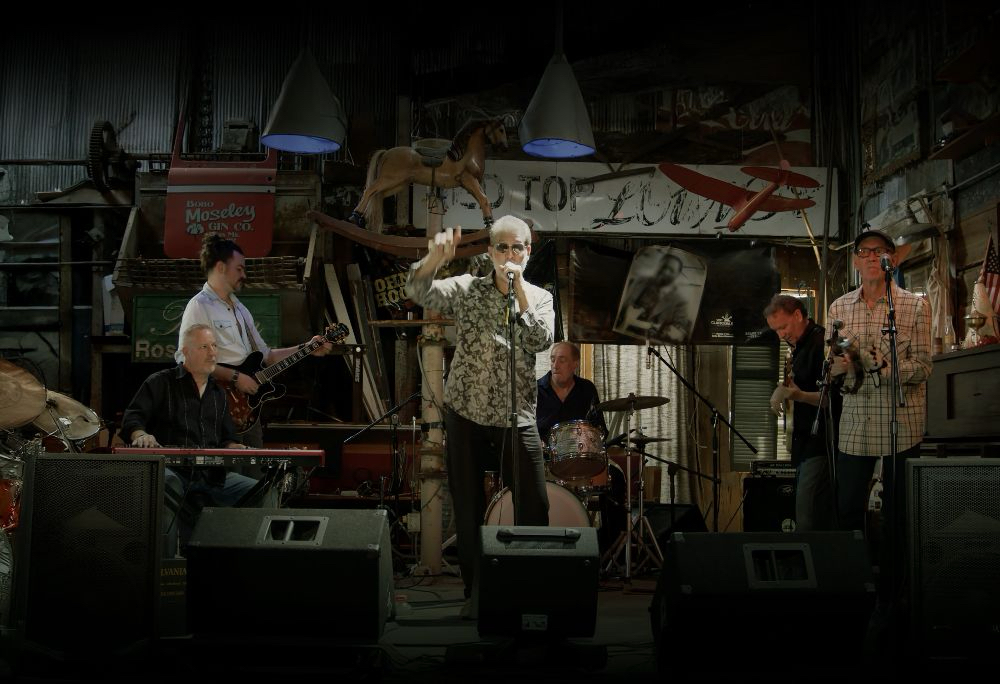
Christopher Wyze & The Tellers do not sound exactly like Leroy Carr and Scrapper Blackwell, nor are they trying to.
“We are who we are,” he said.
That may be the most important distinction in a project like this.
Preserving music does not necessarily mean freezing it in place. Sometimes preservation means allowing the story to move through another set of hands, another voice and another generation.
The Tellers kept the arrangements intentionally spare. No drums. No percussion. Their sound is not a reproduction of Carr and Blackwell’s piano-and-guitar approach, but the restraint leaves room for the songs themselves.
And then there is the sense of place.
The album was recorded only a few miles from where Carr and Blackwell had once made music.
Even the title comes directly from that history.
“Naptown” was a nickname for Indianapolis, and Carr and Blackwell recorded a song called “Naptown Blues.”
As Wyze described it, the song essentially invites people to climb aboard a train and come see what was happening in the city.
That opened another unexpected chapter of our conversation.
Wyze began talking about Richmond, Indiana, and Gennett Records, a recording operation tied to the Starr Piano Company. Artists including Louis Armstrong, Jelly Roll Morton, Fats Waller and Bix Beiderbecke recorded there.
Suddenly we were no longer just talking about an album.
We were talking about geography, migration, race, recording technology and the routes musicians traveled as American music was taking shape.
“The stop in Chicago was through Indiana, and it wasn’t a straight line,” Wyze said. “They stopped the car, and they made music here.”
At one point I laughed and told him, “This really is a movie.”
He did not exactly disagree.
The deeper he has gone into the history, the more he has documented it. Wyze has visited grave sites, researched archival material, traced locations connected to Carr and Blackwell and begun building a video series around the story.
He told me he hopes it will eventually include around 40 videos.
For him, Naptown Blues has clearly become more than an album release.
It has become an act of recovery.
And that may have been the part of the conversation that stayed with me most.
Wyze talked openly about the difficulty of finding information about these musicians, particularly because Black artists of that era were often documented through what the recording industry then called “race records.”
“They weren’t popular beyond that, but they were hugely popular,” he said.
That contradiction is worth sitting with.
Artists could sell extraordinary numbers of records, shape a musical form and influence generations of performers, yet still become unfamiliar names outside of circles devoted to the history.
Wyze cannot change that history.
What he can do is keep telling the story.
“Damn it, these guys are amazing,” he said. “They’re from Indianapolis and made great music.”
That sentence probably says as much about Naptown Blues as any formal description could.
Near the end of our conversation, I asked whether making the project had changed his idea of what it means to carry this music forward rather than simply preserve it.
His answer surprised him a little, too.
He said he had not anticipated how people would respond to the record. Listeners who might not normally describe themselves as blues fans were stopping to ask what they were hearing.
“I didn’t realize how it could touch people,” he said.
That is what good storytelling does.
It reaches across decades.
It crosses genres.
It makes someone who did not know Leroy Carr or Scrapper Blackwell yesterday want to know who they were today.
It makes a musician begin with one old song and end up filling notebooks, visiting archives, walking through cemeteries and recording an entire album.
And sometimes it turns what was supposed to be a straightforward interview into one of those conversations you are still thinking about after you hang up the phone.
Before we ended, Wyze promised to send me a signed copy of Naptown Blues, complete with those 24 pages of liner notes.
“Don’t tease a sista!” I quipped.
I meant it.
I am a collector, a writer and somebody who believes that the stories we fail to tell are often the ones most in danger of disappearing.
This one deserves to be told.
And if Christopher Wyze has anything to say about it, Naptown will keep talking.
Get your copy of Naptown Blues



Leave a comment